‹ All courses · Ketamine 101
Let's learn about
KETAMINE
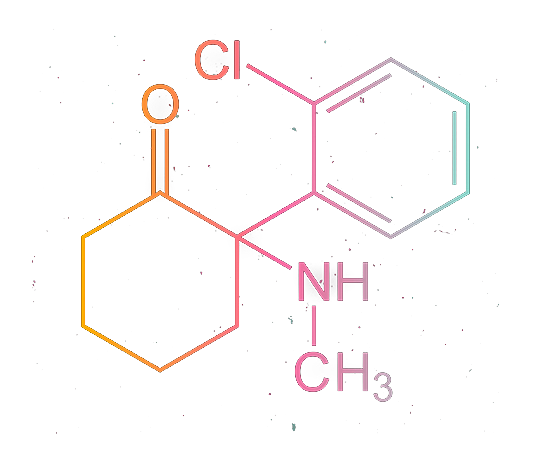
2-(2-chlorophenyl)-2-(methylamino)cyclohexanone
Glowing vial of ketamine HCl
AKA K, Special K, Ket, Vitamin K
Tap to enter, or swipe to begin
What is it?
The ketamine molecule (structural formula)
Ketamine is a
dissociative anesthetic
A medicine that blocks the brain's NMDA glutamate receptors - dulling pain and detaching the mind from the body. It's a non-classic psychedelic: dissociative, not serotonin-based like mushrooms or LSD.
Comes as a clinical liquid, a prescription nasal spray, or powderTaken injected or sprayed in clinical care; commonly snorted outside it
1962Made
1970Medicine
1990sNightlife
2019Spravato
TodayTherapy
What does the
research show?
Tap each card to flip and reveal a finding
Tap to flip
One form, esketamine, is FDA-approved for treatment-resistant depression
Tap to flip
Rapidly eased suicidal thoughts in clinical studies
Tap to flip
Studied for PTSD and severe anxiety
Tap to flip
Early research in bipolar depression & OCD
Flip all 4 to continue
How it unfolds
Tap through the journey
Before
Set & setting
Test your supply, pick a safe, still space, and keep someone you trust nearby.
Dissociation
Numbness
Distortion
Tap through to the end to continue
Quick check
You did a bump of K 20 minutes ago and feel floaty. A friend offers a drink and another line. What's safest?
Harm reduction
Tap each to check it off
Try not to use alone, especially at higher amounts - dissociation can leave you unable to help yourself
Pick a safe, still setting - sit or lie down, away from water, stairs, and traffic
Avoid mixing with alcohol, benzos, opioids, or other depressants
Keep a trusted, clear-headed person within reach
Test your supply - what is sold as ketamine is not always ketamine
Watch your patterns - frequent use is where dependence starts
Check all 5 to continue
What are the risks?
Mixing with depressants (alcohol, benzos, opioids) - blackouts, vomiting, stopped breathing
Heavy dissociation can freeze you in place - a real injury risk
A "k-hole" can feel profound - or scary and unsafe in public
Frequent heavy use can damage the bladder (ketamine cystitis)
Regular use can turn compulsive - ketamine can be habit-forming
Tap to reveal the next risk

Ketamine has real medical uses, but it isn't harmless. It's not considered strongly physically addictive - yet dependence, bladder damage, and mixing with depressants are the big dangers.

Where it stands
Ketamine is both a medicine and a controlled drug
Tap to step through
Myth or fact?
-
You made it ✦

Go back anytime to revisit. Knowing how ketamine really works keeps you and the people around you safer.
Finish →
Floating Portal astronaut
Course complete
You finished Ketamine 101. Knowing more keeps you and your people safer.
✦ Your reward code
Redeem for points on Propeller →
Optional - redeem now or come back anytime.
Sources
dancesafe.org · psychedelics.berkeley.edu · publichealth.jhu.edu
fda.gov · pubmed.ncbi.nlm.nih.gov
Portal is an IRS-recognized 501(c)(3) nonprofit, and this is harm-reduction education central to our mission - not medical or legal advice, and never an endorsement to use any drug. We do not encourage or promote using any substance. Ketamine has approved medical uses, but non-medical use carries real risks and is illegal in most places. In an emergency, call 911. Need support during or after a journey? The Fireside Project psychedelic peer-support line: 62-FIRESIDE (623-473-7433), free and confidential.
‹ All courses
Back to Earn Points